
Windows and doors
Plywood over broken glass and forced doors, fastened so it can come off later without more damage to the frame.
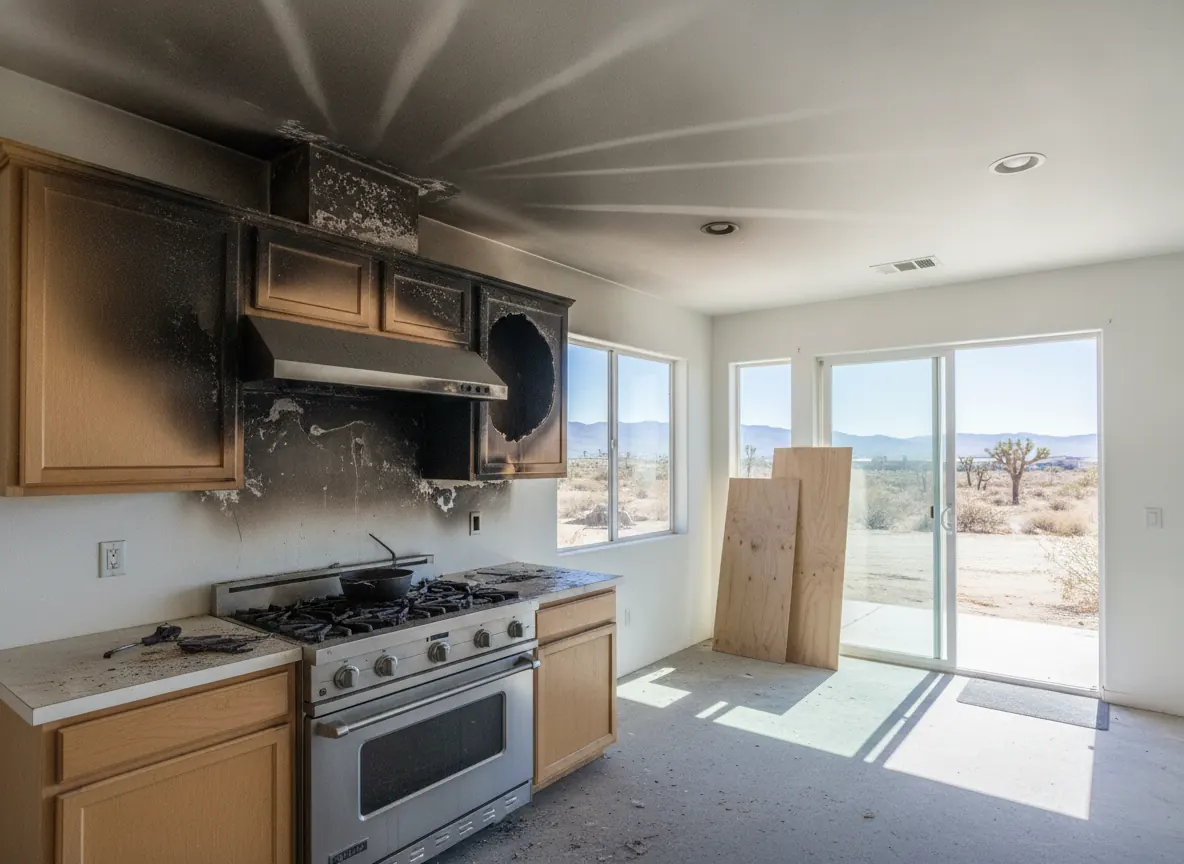
The fire is out, the house smells of smoke and there may be water everywhere from putting it out. For fire damage restoration in Lancaster, CA and the Antelope Valley, describe what happened once and independent local restoration companies can reply with free quotes for board-up, cleanup, contents and repairs. Antelope Valley Fire & Water Damage is a free quote service, not a restoration company or a fire agency.
Get a Free Quote Call (877) 265-2390Then send a request or call to be connected with a local restoration company.
Get quotes when you see:
Most fire jobs are water jobs too, because of the water used to put the fire out. For smoke with little burning, see smoke and soot cleanup; for drying, see water extraction.
An open house invites more damage: wind-blown dust and rain, animals and theft.
Plywood over broken glass and forced doors, fastened so it can come off later without more damage to the frame.
Tarps over holes cut for ventilation or burned through, weighted or battened down against wind.
Temporary fencing on a badly damaged house, and a check that utilities stay off until an electrician or the utility clears them.
Wind is the local test. Strong winds are common here, and storms have snapped dozens of power poles in Lancaster and Palmdale (NOAA Storm Events). On November 8, 2022, gusts reached 64 mph at Palmdale Airport (NOAA Storm Events). Ask how the boards and tarps will be fastened to hold in that kind of wind, and photograph everything before it is covered.
A good scope says, item by item, what gets cleaned and what gets replaced.
Tile, stone, metal, glass, sealed wood, dishes, many hard furniture pieces, and clothing or linens sent out for specialty cleaning.
Charred framing, burned drywall and insulation, wet carpet pad, mattresses, and upholstered pieces with heavy smoke or soot.
Food, drinks, medicine and cosmetics exposed to heat, smoke or water. Photograph and list them first for your claim.
After a larger fire, the company may inventory and photograph your belongings, move them out for cleaning or storage, and bring them back after repairs. Ask for the inventory in writing, where things will be stored, and whether storage is billed separately.
The company you choose usually works through these stages.
Board up windows and doors and tarp roof openings to keep out wind, rain and intruders.
Test-clean surfaces, photograph damage and write a scope that separates cleaning, contents and rebuild.
Extract firefighting water, remove soaked materials and dry the structure with moisture readings.
Pack out contents if needed, clean surfaces and ductwork, and treat lingering odor.
Replace drywall, framing, cabinets and finishes under a permit where required, then walk through the work with you.
Who responds. Lancaster and Palmdale are served by the Los Angeles County Fire Department; Kern County towns such as Rosamond, Mojave, Tehachapi and California City are on the Kern County side. Ask the crew at the scene for the incident or report number, since your insurer will want it.
Older homes. About a third of Lancaster's homes were built before 1980, and in Quartz Hill it's about 60% (Census ACS 2020–2024). Older homes can contain asbestos, so ask about testing before walls come out.
Permits for the rebuild. Lancaster and Palmdale run their own building departments. Quartz Hill, Lake Los Angeles, Littlerock, Acton, Agua Dulce, Sun Village and Leona Valley go through LA County Public Works' Antelope Valley office in Lancaster. Rosamond and Mojave go through Kern County. Check the city's or county's website for current contact details. The Department of Insurance advises against making the final payment until the building department has signed off.
Insurance after a declared emergency. When a loss is part of a declared state of emergency, California law has extra rules for some claims, including an advance on contents for a furnished home that is a total loss (Insurance Code §10103.7). Ask your insurer how they apply to you. For smoke from a wildfire rather than a house fire, see wildfire smoke and ash cleanup.
| Item | Typical range |
|---|---|
| Fire damage restoration | $3,000–$40,000 (average about $11,900) |
| Smoke damage cleanup | $200–$1,200 per room |
| Emergency board-up or tarp | $200–$1,000 (varies widely) |
| Nights and weekends | often 20–50% more |
Typical national ranges from published cost guides (2025–2026: HomeGuide, Angi, Fixr, This Old House). Estimates, not quotes. Your price depends on the damage, the category of water, materials and access; repairs and rebuilding are usually billed separately.
Fire jobs vary too widely for a calculator; written scopes are the only real comparison. Many restoration companies take after-hours emergency calls; ask about after-hours rates. See the cost guide for Lancaster, CA for what drives water and drying costs, which are part of most fire jobs.
In California, a repair job of $1,000 or more, any job that needs a building permit, or any job where the worker brings a crew must be done by a CSLB-licensed contractor (Business and Professions Code §7048). Check any contractor's license at cslb.ca.gov or call 800-321-2752 before you sign.
California homeowners have the right to choose their own licensed contractor. Your insurer can't require you to use a particular company (Insurance Code §10103.5; 10 CCR §2695.9). Only a public adjuster licensed by the California Department of Insurance can be paid to handle your claim for you. Verify licenses at 1-800-967-9331. In California, a contractor generally can't offer you a discount meant to cover your insurance deductible unless the work matches what your insurer approved (Penal Code §551).
California caps a contractor's down payment at $1,000 or 10% of the contract, whichever is less, and payments can't get ahead of the work (B&P §7159.5). After a declared disaster, contracting without a license to repair damage is a felony-level crime in California (B&P §7028.16). If you sign a contract to repair damage from a declared emergency, such as a fire or flood, you have seven business days to cancel (B&P §7159; Civil Code §1689.6). For 180 days after a declared emergency, California generally bars contractors from raising repair and cleanup prices more than 10% over what they charged before (Penal Code §396).
Antelope Valley Fire & Water Damage does not check licenses; each company is responsible for its own CSLB licensing, insurance, pricing and work. General information, not legal or insurance advice.
Don't go back inside until the fire department says it's safe. Ask whether power, gas and water were shut off and whether the structure is sound. Once you're cleared, go in only for essentials, wear sturdy shoes and gloves, and photograph each room before anything is moved or thrown out.
Usually, if windows are broken, doors were forced or the roof was opened. Boarding and tarping keep out wind, rain and intruders, and many policies expect you to take reasonable steps to prevent more damage. Photograph the openings first and keep the board-up invoice for your claim.
No. California homeowners have the right to choose their own licensed contractor, and your insurer can't require you to use a particular company (Insurance Code §10103.5; 10 CCR §2695.9). If your contractor's estimate is higher than the insurer's, California rules set out what the insurer must do. General information, not insurance advice.
Hard, non-porous items such as tile, metal, glass, dishes and sealed wood often clean up. Heavily soot-stained or water-soaked porous items, such as mattresses, insulation and carpet pad, are often replaced. Throw away food, medicine and cosmetics exposed to heat or smoke, but photograph and list them first for your claim.
Say what burned and where, when it happened, whether the house needs boarding or tarping, whether there is water from firefighting, whether you've opened an insurance claim, and whether you own or rent. Photos help.
Antelope Valley Fire & Water Damage passes your request to independent local restoration companies, and they reply to you directly. Companies may pay to receive requests. There is no cost to you and no obligation. You sign any contract directly with the company you choose and pay that company directly. You can send a request any time, or call to be connected with a local restoration company.
Independent restoration companies serving Lancaster, Palmdale and the Antelope Valley reply to you directly.
Free, no-obligation quotes from local restoration companies across Lancaster, Palmdale, Quartz Hill, Rosamond and the Antelope Valley.