
Can Mold Grow After Water Damage in a Dry Desert Climate?
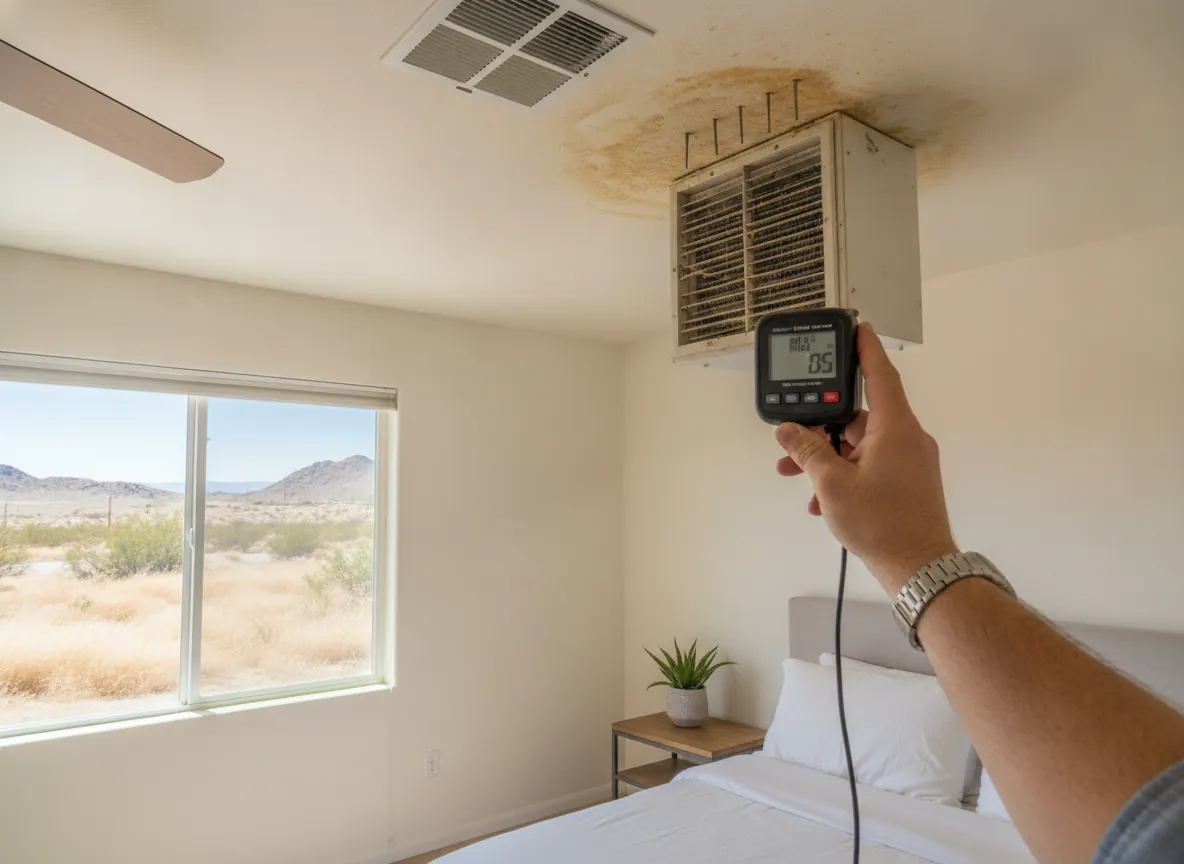
Short answer: yes. The Antelope Valley gets only about 6 to 7 inches of rain a year (NOAA 1991–2020 normals, Lancaster Fox Field and Palmdale Airport), but dry outside air doesn't reach the inside of a wet wall. Water trapped behind drywall, under flooring or in insulation can stay wet long enough for mold to grow, even in Lancaster or Palmdale. What matters is how fast the hidden water is found and dried.
Antelope Valley Fire & Water Damage is a free quote service, not a restoration company, a contractor or an insurance adjuster. It doesn't do cleanup, drying, mold work or repairs, and it isn't affiliated with the City of Lancaster, the City of Palmdale, Los Angeles or Kern County, the Los Angeles County Fire Department, the Kern County Fire Department, FEMA, your utility or your insurance company. Describe the damage once, and independent local restoration companies, which may pay to receive requests, can reply with quotes. You sign any contract directly with the company you choose and pay that company directly.
Do this first.
- Stop the water. Pipe burst? Shut off the water at your main valve, then call your water provider if the leak is on their side of the meter.
- Turn off power to wet areas only if you can reach the panel without standing in water.
- Photograph the water, the source and any stains or spots before cleanup.
- Call your insurer, and if you rent, tell your landlord right away.
- Don't scrub or sand visible mold, and don't run fans across moldy areas, which can spread spores.
Why the dry desert air doesn't protect your walls
On a sunny day the air outside is dry, and a wet driveway is dry in an hour. A wall cavity is different. Drywall, wood framing, carpet pad and insulation soak up water, and there is little air moving inside a closed wall or under a floor. The surface you can see may feel dry within a day while the back of the drywall, the bottom plate of the wall and the pad under the carpet stay wet.
That is why restoration companies use moisture meters and thermal cameras rather than touch. They measure the materials, not the room air, and they keep drying until the readings reach a normal level for that material. The dry air here can help a drying job go faster, but it can't reach water it doesn't touch.
Common ways water gets trapped in Antelope Valley homes
- Freezing nights. Lancaster averages about 68 nights a year at or below freezing, mostly from November through February (NOAA normals, Fox Field). Tehachapi averages about 82. A pipe that splits inside a wall can leak for hours before anyone sees it. See burst and frozen pipe water damage.
- Swamp cooler and roof leaks. If your home has a rooftop swamp cooler, a stuck float valve, cracked pan or loose line can drip into the attic for days. The first sign is often a ceiling stain, which means the insulation above is already wet. A cooler that runs all summer also adds moisture to the air inside, so check for musty smells near vents and in closets.
- Storms. On August 20, 2023, Tropical Storm Hilary dropped 3.93 inches on Palmdale Airport and 3.59 inches on Lancaster's Fox Field, the wettest single day on record at both stations (NOAA). Over December 24 to 27, 2025, the National Weather Service issued flood warnings for Lancaster, Palmdale, Quartz Hill and Lake Los Angeles. Water that came in under doors or through a roof can wick up walls.
- Slow leaks. Drips under sinks, around toilets, from water heaters and from washing machine hoses can soak cabinets and subfloor without a puddle you would notice.
How quickly does mold start?
There is no exact clock, because it depends on the material, the temperature and how wet it is. The general rule restoration companies work from is simple: the longer drywall, wood and carpet stay wet, the more likely mold becomes. Getting standing water out and drying started within the first day or two gives you a much better chance of avoiding a mold job. Water from sewage or floodwater is a different case: it is contaminated from the start, and wet drywall, insulation and carpet it reached usually have to come out.
Signs of mold after water damage
- A musty or earthy smell that doesn't go away after the area looks dry.
- Spots, fuzz or dark staining on drywall, baseboards, the back of cabinets or the underside of carpet.
- Paint that bubbles or peels, or drywall that feels soft.
- A ceiling stain that keeps growing, especially under a rooftop cooler or roof penetration.
- Warped flooring or baseboards that pull away from the wall.
California rules on mold
California doesn't issue a mold-specific license, and the state hasn't set a safe mold level. CSLB licensing still applies to remediation and rebuild work of $1,000 or more. In California, a repair job of $1,000 or more, any job that needs a building permit, or any job where the worker brings a crew must be done by a CSLB-licensed contractor (Business and Professions Code §7048). Check any contractor's license at cslb.ca.gov or call 800-321-2752 before you sign.
No California law requires a mold test before cleanup. Testing can still be useful in some cases, such as when you smell mold but can't see it, or when you want a record before and after the work. Ask any company that offers testing what it will test, who reads the results and how the results change the plan.
For renters, visible mold can make a rental unit substandard under California housing law (Health and Safety Code §17920.3). Tell your landlord in writing and keep a copy.
Older homes. About a third of Lancaster's homes were built before 1980, and in Quartz Hill it's about 60% (Census ACS 2020–2024). Older homes can contain asbestos, so ask about testing before walls come out.
Does insurance cover mold?
Often only in part. Many policies cover sudden and accidental water damage but exclude or limit mold, especially mold from a slow leak or long-term moisture, and some set a dollar cap. Mold that results from a covered water loss may be treated differently from mold that grew over months. Read the mold section of your policy and ask your insurer before the cleanup starts. This is general information, not insurance advice.
Questions to ask a mold or drying company
- What is your CSLB license number, and does your team hold IICRC certification?
- How will you find hidden moisture, and will you share moisture readings and drying logs?
- How will you contain the work area so spores don't spread to other rooms?
- Which materials will you remove, and which can be dried in place?
- How will you show the area is dry before walls are closed up?
- Is a permit needed for the rebuild, and who pulls it?
For more on the work itself, see mold remediation after water damage and water damage restoration and water extraction. Typical national price ranges, including mold, are in the water damage restoration cost guide for Lancaster, CA.
Frequently asked questions
Can mold grow in Lancaster, CA if it's so dry?
Yes. Dry outside air doesn't reach water trapped inside walls, under flooring or in insulation. A burst pipe, a swamp cooler leak or storm water can keep those materials wet long enough for mold to grow. Moisture meters show whether materials are really dry, even when the surface feels dry.
Can a swamp cooler cause mold?
It can contribute. If your home has a rooftop swamp cooler, a leak from the pan, float valve or water line can soak the attic and ceiling, and a cooler adds moisture to indoor air while it runs. Fix the leak with an HVAC tech or roofer, then have the wet ceiling and insulation checked and dried.
Does California require a mold license or a mold test?
No. California doesn't issue a mold-specific license, and the state hasn't set a safe mold level. No state law requires a mold test before cleanup. CSLB licensing still applies to remediation and rebuild work of $1,000 or more, so check the company's license at cslb.ca.gov.
Is mold from water damage covered by insurance?
It depends on your policy. Many policies exclude or limit mold, especially from slow leaks, while mold that results from a covered sudden water loss may be handled differently or capped. Read your policy's mold section and ask your insurer before cleanup starts. This is general information, not insurance advice.